
The Faces of the Face-Off : Life and Power on the Taksing Frontier
The India-China frontier in Arunachal Pradesh’s Upper Subansiri district illustrates how territorial disputes, military competition, infrastructure development and the everyday lives of border communities are increasingly interconnected. This report examines the evolving strategic significance of Taksing and the adjoining Asaphila sector, tracing developments from the 2003 patrol confrontation to renewed tensions in 2026. Recent acknowledgements of continuing face-offs by Indian officials, alongside allegations of Chinese military activity and restrictions on traditional grazing grounds, underscore the persistence of competing perceptions of the Line of Actual Control (LAC). However, the available evidence does not independently establish the precise extent of reported incursions or changes in territorial control. Beyond the military dimension, the article compares India's infrastructure initiatives around Taksing with China's development of Yumai, where civilian settlement, public services and border security are presented as closely integrated priorities. It also examines the strategic implications of hydropower development, road connectivity, telecommunications and education, while highlighting the cultural significance of indigenous communities and historical pilgrimage routes. Despite substantial investments in frontier infrastructure, residents continue to report difficulties accessing essential services and customary lands. The central argument is that effective border management cannot be measured solely through military deployments, road construction or infrastructure expenditure. India's long-term strategic position along this sensitive frontier also depends on sustaining viable settlements, protecting indigenous livelihoods, ensuring dependable public services and maintaining civilian access to historically significant landscapes.
In August 2026, a resident of Taksing described a frustration that rarely features in accounts of the India-China boundary dispute. A WhatsApp message could take three days to arrive. Sometimes, sending one meant waiting the whole day.
The complaint appeared in Bengia Ajum’s report on road and mobile connectivity in Taksing and Limeking. While attention focused on reported Chinese movements near the frontier, residents wanted their difficulties with transport and communications to receive similar attention. Those problems affected journeys for healthcare, schooling and applications for employment.
Two months later, the military situation entered public discussion more explicitly. On 22 October, Shatrujeet Kapur, director general of the Indo-Tibetan Border Police (ITBP), acknowledged continuing face-offs at several locations in Arunachal Pradesh. On 29 October, Chief Minister Pema Khandu acknowledged recurring transgressions while describing the border as normal and well guarded. The statements confirmed friction without providing a location-by-location account of what had been resolved. Between these accounts lies the larger story of Taksing, a settlement receiving new infrastructure while residents continue to describe difficulty moving, communicating and accessing services. Nearby Asaphila brings another dimension to the question of access the contested routes used by patrols and the surrounding landscape claimed by local communities. Understanding how these concerns became connected requires following the rivers before following the roads.
Along the Rivers and Valleys of the Upper Subansiri
Yumai lies in Lhunze County, within Shannan in the Tibet Autonomous Region, administered by China. Chinese official reporting describes its position on the southern slopes of the Himalayas and records its development into a township containing two administrative villages. The name also appears as Yume in accounts of the historical Tsari pilgrimage. The river associated with the valley, the Yume Chu, belongs to the upper Subansiri drainage. As the Central Water Commission’s basin study describes, it joins the Char Chu before their combined waters enter the Chayal Chu upstream of the boundary. This gives Yumai a physical connection with the river landscape around Taksing. The historical pilgrimage supplied another: travellers returning from Taksing followed the Yume Chu towards Yume, according to Harish Kapadia’s account. Modern Chinese reporting presents Yumai through the story of a once exceptionally small population. Official accounts describe a period when only Sangje Quba and his two daughters, Drolkar and Yangzom, lived there. That account has become central to the authorities’ portrayal of civilian settlement and border guardianship. The later population figures show the scale of the reported expansion. Xinhua recorded 67 households and more than 200 residents in October 2024. In August 2025, China Central Television (CCTV) reported 67 households and 253 residents.
Asaphila forms part of that wider landscape. In his analysis of the 26 June 2003 patrol confrontation, former Army chief General V. P. Malik placed Taksing on the eastern edge of a densely forested mountainous tract of approximately 100 square kilometres. Apart from local hunting trails, he wrote, foot tracks followed the Yume Chu and Chayul Chu. Malik described an Indian non-military patrol intercepted and disarmed by a Chinese patrol, then escorted towards an Indian observation post, where its weapons were returned. He criticised the disarming and called for improved procedures and communication. His account identified Tama Chung Chung as the nearest Indian roadhead and described difficult approaches on the Chinese side too. Those distances belong to 2003. The underlying dispute concerned movement through terrain where the two sides’ perceptions of the Line of Actual Control (LAC) were widely separated and undelineated.

Figure 1: Historical Ringkor and Kingkor Pilgrimage Routes Around Takpa Siri
The map illustrates the historical pilgrimage circuits around Takpa Siri, including Taksing, Longju, Potrang Lake and the river valleys connecting present-day Arunachal Pradesh and Tibet. It highlights the traditional routes that linked communities across the frontier before cross-border pilgrimage was discontinued. The boundary line shown reflects the source map's representation and should not be interpreted as a verified depiction of present-day military positions or the Line of Actual Control.
Source: Harish Kapadia, “Secrets of Subansiri: On Pilgrim Trail of Takpa Siri,” The Himalayan Journal, vol. 62 (2006). https://himalayanclub.org/hj/62/7/secrets-of-subansiri/
Toni Huber’s The Cult of Pure Crystal Mountain, published in 1999, examines this religious landscape principally during the 1940s and 1950s. In explorer Harish Kapadia’s account, pilgrims descended the Tsari Chu valley, followed the Subansiri upstream to Taksing, and climbed along the Yume Chu towards Yume. The last great circuit took place in 1956. Local communities sustained the journey. Kapadia describes Tagin-built shelters stocked with wood and food. Huber documents payments in kind from the Tibetan government to the Mra and Na communities to secure passage and assistance. The route depended on arrangements with the people whose territories the procession crossed. The rivers continue to connect the valleys physically. According to the Central Water Commission’s basin study, the Yume Chu joins the Char Chu, whose combined waters enter the Chayal Chu near Karutra, a few kilometres upstream of what the document calls the international boundary. The river system continues through Arunachal Pradesh towards the Brahmaputra. This geography links Yumai, Taksing and the wider Subansiri basin. It also requires care: settlement development in Yumai, civic projects in Taksing and reported construction in Asaphila concern connected but distinct locations. Evidence from one does not automatically establish what happened in another.
Taksing is a frontier settlement and administrative headquarters in Arunachal Pradesh’s Upper Subansiri district, within the upper Subansiri river valley. India opened Taksing administrative circle in 1959, according to the Upper Subansiri district administration, which places it 195 kilometres from Daporijo. Establishing the circle expanded administration into the area; it did not settle the boundary. Population figures describe several overlapping communities and geographical units. The 2011 District Census Handbook recorded 1,295 residents in Taksing circle. Within it, Taksing H.Q. village had 324 people in 52 households. Neither total establishes the number of Nah residents or Buddhist adherents.
A December 2021 report on Rajiv Gandhi University’s language outreach described Nah as spoken in around ten villages, including Taksing Model Village. It attributed a Nah-Tagin population of 586 to the 2011 Census. The underlying community-specific table has not been independently verified for this article, and that reported population cannot be treated as a confirmed count of speakers. The distinctions are useful when assessing development. A project serving Taksing H.Q. may not necessarily reach every settlement in the circle, while the community’s religious, linguistic and livelihood connections extend beyond its headquarters.
2008-2019: Where There’s a Valley, There’s a Way
In Yumai, Chinese official accounts date a small hydropower station to around 2008-09. Xinhua’s January 2018 report gives 2008 for the 125-kilowatt plant and describes growing demand and frequent outages as the population increased and living conditions changed. A grid connection was being developed. Construction of a new transmission line began in August 2017 and finished by year-end, although substation work remained pending when the report appeared. A July 2019 retrospective, which dates the small station’s completion to 2009, records connection to the main grid in 2018.
Road construction was also changing the approaches to Taksing. Work on the Tama Chung Chung-Taksing route began in 2009. While that connection advanced, road building inside Asaphila appeared in accounts of military friction. An October 2014 Times of India report, citing unnamed sources, said Indian soldiers had stopped a PLA attempt to construct a road towards Point 2445. The incident reportedly did not develop into a prolonged confrontation. The account establishes a reported construction attempt, without demonstrating a completed road or its present alignment. Patrol access remained contested. In April 2018, reporting based on PTI’s conversations with official sources described a Chinese protest over Indian patrolling in Asaphila. India rejected the allegation of transgression and maintained its right to patrol the area.
The following month, BRO reported road connectivity to Taksing. Contemporary coverage dated the milestone to 9 May 2018, after nine years of construction, connecting Taksing with Limeking over approximately 80 kilometres.The engineering involved more than cutting a route through forest. The Defence Ministry’s 2018 review records a Bailey bridge on the Tama Chung Chung-Taksing road assembled using almost 40 tonnes of stores airlifted from Limeking.
Electricity infrastructure was receiving state funding too. Arunachal Pradesh’s 2018-19 revised estimates listed the Taksing micro-hydel scheme over Esmi Nallah with two 50-kilowatt units. The entry establishes the scheme’s presence in the budget, without demonstrating commissioning dates or reliable generation. Across the frontier, a later Xinhua account dates completion of Yumai’s 50-kilometre paved-road upgrade to 2019, reporting investment exceeding 500 million yuan and relief from winter isolation. That assessment remains an official claim rather than an independently measured record of year-round access.
2021-2024: Community, Culture and the State
As roads and utilities developed, researchers were recording a different part of Taksing’s infrastructure: the language and knowledge through which the community understood itself. Fieldwork in November and December 2021 informed the Ethnographic Profile of the Nah (Tagin) of Arunachal Pradesh. Researchers worked through Rajiv Gandhi University’s (RGU) Centre for Endangered Languages, within the Arunachal Institute of Tribal Studies. The university’s annual report lists that volume and A Dictionary of Nah as 2023 publications.
Political attention followed a broader development agenda. During his early January 2022 tour, Khandu visited Taksing, Gelemo and Nacho, inspected roads towards Nacho and the Maza sector, and discussed connectivity with security and works officials. The Chief Minister’s PR Cell account records commitments concerning hydropower, village roads and the Nacho helipad. The tour concluded at Si-Donyi in Nacho. During his January 2022 tour of Upper Subansiri, Khandu explicitly linked civilian presence and livelihoods near the frontier with countering territorial claims. Citing Tawang as an example, he described yak rearing, tourism and pilgrimage centres as supporting vigilance along the Line of Actual Control (LAC). His reported remarks show that sustaining civilian activity was already part of the government’s stated approach to border development.
Religious institutions were receiving attention through a separate funding process. On 6 May 2022, a Culture Ministry committee recommended ₹20 lakh against a ₹30 lakh application for monastery and Buddhist heritage restoration from an organisation recorded as “Takeng Buddhist Welfare Society (TBWS), taksing, upper subansiri.” The minutes establish a recommendation, rather than disbursement or completion of a particular structure.
The Tourism Ministry’s festival portal identifies the Taksing Buddhist Welfare Society as organiser of Seju at Tsari Gompa. Its description records residents contributing labour and resources, with Dongda and Targya dances forming part of the festival.
On 5 May 2023, the Nah-Tagin Buddhist community organised a Buddha Purnima programme at Taksing Kumbe, also called Tsari Gompa. Later that year, Seju was celebrated from 22 to 28 November, concluding on the full moon of the tenth lunar month.
During the Seju festival held from 22 to 28 November 2023, three lamas from Tawang Monastery conducted prayers at Taksing’s monastery. The local Army garrison provided accommodation, electricity, heating and decorations, while residents wore traditional attire, sang songs recounting human origins and participated in cultural performances, according to The Arunachal Times. The gathering brought together local cultural practices, visiting Buddhist clergy and practical assistance from the Army.
Alongside these joyous events, residents were seeking access to land beyond the settlement. In a later account of its representations, the Nah Welfare Society said it submitted a memorandum to Governor K. T. Parnaik on 29 September 2023 concerning alleged People’s Liberation Army (PLA) trespass into ancestral grazing grounds, particularly around Kejula and Sagamla. The society said that memorandum also requested a road connecting Redding in Taksing circle with Huri in Kurung Kumey. These locations should retain their own identities rather than all being labelled Asaphila, but the requests connect the settlement’s development with the surrounding livelihood landscape.
2023-2025: Parallel Stories
In Yumai, a September 2023 Tibet Daily report described the township’s upgraded small hydropower station operating within a main-and-backup electricity supply arrangement. The emphasis was on improving reliability after Yumai’s connection to the main grid.
In Taksing, cultural and tourism projects were moving through government funding procedures. A sanction annexure published in June 2024 listed a 30-kilometre Taksing-hot spring trekking route, a 70-kilometre Redding-Gelemo route and a multipurpose cultural hall. Their estimated costs totalled ₹5.8 crore, with ₹1.45 crore recommended for release for 2023-24. That 25 per cent proportion described the recommended funding release; it did not measure physical completion. The document also placed these projects within a funding timetable that preceded their eventual inauguration.
Across the frontier in Yumai, Xinhua reported 67 households and more than 200 residents in October 2024. Its account described housing, drainage, telecommunications, a school, health facilities, a visitor centre and grid electricity, dating the associated border-village construction programme to 2018. These descriptions establish what Chinese authorities reported building. They do not provide an independent assessment of service quality or a population series directly comparable with Taksing’s census records.
Back in Taksing, November 2024 brought attention to religious connections across the mountains. An activity report from the Indian Himalayan Council of Nalanda Buddhist Tradition (IHCNBT) records a conference organised with the International Buddhist Confederation (IBC). Participants included Tibetologist Claude Arpi, Taksing Buddhist Welfare Society (TBWS) general secretary Nobin Hafi, Nah Welfare Society (NWS) general secretary Tache Chader and NWS member Younten Phuntso Chader.
Contemporary coverage identified Natuk Mra as president of the Taksing Buddhist Society and recorded IHCNBT general secretary Maling Gombu’s hope of reviving the pilgrimage by 2028, the next Monkey Year. The proposal expressed an aspiration requiring government engagement; it did not establish an agreed reopening of the cross-border route.
Language documentation formed another part of Taksing’s community activity that month. At a 26 November outreach programme, Keru Chader and Tache Chader released the Nah ethnographic study and dictionary. The programme brought together the Research Institute of World’s Ancient Traditions, Cultures and Heritage (RIWATCH) Centre for Mother Languages (RCML), the Centre for Endangered Languages (CFEL) at Rajiv Gandhi University (RGU), NWS and the Ngunuk Foundation. TBWS representatives were among those attending.
On 27 November, around 20 people participated in a Nah-language speech competition during Siju, organised by NWS and RCML. Researchers collected textual and audiovisual material for archives, a proposed documentary and children’s pictorial glossaries. Apart from this electricity maintenance also remained on the Indian development agenda. The Government of Arunachal Pradesh’s 2024-25 hydropower schedule listed ₹35.30 lakh for synchronising Taksing’s generating units and associated transmission and distribution arrangements, alongside ₹23 lakh for restoration involving the tailrace, pipeline, drainage and erosion protection. Together, the entries amounted to ₹58.30 lakh for integration and repair, with no additional generating capacity specified. The electricity records therefore describe different stages. The Chinese report presented reliability improvements at Yumai as operational; the Arunachal Pradesh schedule recorded funding provisions for work at Taksing. The latter alone cannot establish that the repairs were completed or that supply became more dependable.
In Yumai, Chinese reporting in 2025 made the connection between civilian settlement and security more explicit. A Chinese military account described residents guiding troops and sharing information. In August 2025, China Central Television (CCTV) reported 67 households and 253 residents, alongside regular cooperation between border police and civilian border guards.
The two places thus emerge through different institutional arrangements and different kinds of evidence. In Indian-administered Taksing, the documented activities involve community societies, government departments, religious organisations, researchers and military assistance. In China-administered Yumai, official reporting presents improvements to civilian life and participation in border guardianship as closely connected elements of township development.
Hydropower: Of Rivers, Dams and People
The rivers around Taksing connect two different development questions. One concerns dependable electricity for remote settlements. The other concerns the scale, operation and downstream consequences of large hydropower projects. Both matter to the frontier, but they require different measures of success.
2008-2023: An electric spark
Yumai’s electricity history illustrates the limitations of a small local plant. Xinhua’s January 2018 account describes a 125-kilowatt station built in 2008, followed by growing demand and frequent outages. A later official retrospective dates its completion to 2009. Transmission-line construction began in August 2017 and finished by year-end, although substation work remained pending when the January report appeared. The retrospective dates connection to the main grid to 2018.
On the Indian side, Arunachal Pradesh’s 2018-19 revised estimates listed the Taksing micro-hydel scheme over Esmi Nallah with two 50-kilowatt units, giving it a combined listed capacity of 100 kilowatts. The budget records the scheme without establishing how consistently either unit supplied electricity.
By September 2023, Chinese reporting described a more extensive electricity network serving Yumai. A Tibet Daily report put State Grid Tibet Electric Power’s investment at 87.327 million yuan, covering three 35-kilovolt substations and associated transmission and distribution lines. It also described an upgraded small hydropower station supporting a main-and-backup supply arrangement.
The same report claimed 99.5 per cent supply reliability, a 99.89 per cent voltage compliance rate, and fault-resolution times shortened to two hours. These are officially reported performance figures, rather than independently audited measurements. Even so, they indicate the change in emphasis: from introducing electricity to maintaining a network capable of serving homes, businesses and public facilities.
Taksing’s subsequent expenditure records reveal the importance of maintenance. The state’s 2024-25 hydropower schedule provided ₹35.30 lakh for synchronising its generating machines and associated transmission and distribution arrangements, and ₹23 lakh for restoration involving the tailrace, pipeline, drainage and erosion protection.
Together, the entries amounted to ₹58.30 lakh for integration and repair. They demonstrate attention to existing infrastructure, without establishing completed works or hours of electricity delivered. Yumai’s reported reliability and Taksing’s budget allocations therefore cannot be compared as equivalent outcomes: one describes claimed service performance, while the other records financial provision.
The Subansiri: Why the Yume Chu matters
The larger Indian project most directly connected to the Yume Chu is Oju, proposed on the Subansiri. Its 2022 feasibility report identifies the Nye Chu, Laru Chu and Yume Chu as three main contributing streams within an upstream catchment of approximately 9,827 square kilometres.
This gives the river flowing from the Yumai valley a documented connection to downstream Indian power planning. Water from these tributaries forms part of the resource on which the proposed project’s generation calculations depend.
The Central Electricity Authority (CEA), in its 2025 hydro-development profile, listed Oju at 2,220 megawatts, under survey and investigation, with Oju Subansiri Hydro Power Corporation Private Limited responsible for preparing the detailed project report. The profile classified it as a run-of-river scheme. The difference in scale is considerable. Taksing’s two listed units together amount to 0.1 megawatt. Oju’s proposed capacity is 22,200 times greater, calculated from the published ratings. That comparison describes generating capacity; it says nothing about how much electricity would reach Taksing’s households.
The distinction is central to assessing frontier development. A large downstream project can contribute substantially to the wider electricity system while leaving local distribution, maintenance and service reliability as separate tasks.
Oju’s planning record also needs to be read by stage. A Union government review of water-resources work during 2025 lists Oju among projects whose instrumentation aspects were technically cleared. Such a clearance concerns one component of appraisal. It does not establish that every approval was obtained or that construction began. The documents establish Oju’s capacity, planning activity and catchment relationship with the Yume Chu and energy potential.
2025: A much larger project on the Yarlung Zangbo
A separate river system carries the larger Chinese development. The Yarlung Zangbo becomes the Siang after entering India; Taksing and the Yume Chu belong to the Subansiri system. Both eventually contribute to the Brahmaputra, but the distinction between their upstream catchments must remain clear.
In a January 2025 article published by China’s Foreign Ministry, China’s chargé d’affaires in India, Wang Lei, described the planned lower Yarlung Zangbo development as having approximately 60,000 megawatts of capacity and projected annual generation approaching 300 billion kilowatt-hours. These were official projections, rather than operating results.
On 19 July 2025, Premier Li Qiang announced the start of construction. Xinhua described five cascade power stations, an estimated investment of 1.2 trillion yuan, and a development approach involving tunnels that convey water across river bends. It said the electricity would principally serve markets outside Tibet while also meeting local demand.
This is a different undertaking from the small plant serving Yumai. Its scale extends the discussion from village electricity to regional generation and the management of a transboundary river. China’s diplomatic account argued that the project would not adversely affect downstream countries and could help moderate seasonal flows by storing floodwater and releasing water during drier periods. Those are the Chinese government’s stated assurances. Assessing them requires information about reservoir operation, storage, release schedules and downstream effects; projected generating capacity alone cannot answer those questions.
India’s Siang proposal
India has its own large project under consideration on the same transboundary river system. The CEA’s 2025 profile listed the 11,200-megawatt Upper Siang project under survey and investigation, classifying it as a storage scheme.
Its planning predates China’s July 2025 construction announcement. The Indian developer’s official project account records that the Ministry of Jal Shakti entrusted preparation of a pre-feasibility report in April 2022. Three alternatives Uggeng, Ditte Dimme and Parong were examined, and the report was submitted in December 2022. Further geological investigations were recommended to help determine the site.
This chronology matters. The project has acquired a stronger public security justification, but its development cannot be explained solely as a response to the latest Chinese announcement.
On 29 October 2026, Khandu described the Siang Upper Multipurpose Project as a “defence mechanism project,” presenting hydropower as an additional benefit. He also said discussions with the public were continuing.
For sections of the indigenous Adi community, those discussions concern land and livelihoods as well as national security. Reporting from October 2026 documented continuing opposition around survey and drilling activity, with fears about displacement, ancestral land and the loss of ways of life. The scale of those concerns cannot be resolved by comparing the Indian project’s proposed capacity with China’s.
The hydropower story therefore returns to the question running through Taksing’s development. At village scale, the evidence needed is dependable supply: whether machines operate, damaged infrastructure is repaired and electricity reaches users. At river-basin scale, it includes credible operating plans, downstream information and meaningful participation by affected communities.
As both countries invest in Himalayan rivers, how will the people living beside them know that the promised electricity and security benefits justify the changes being made to their land and water?
2025-2026: A Small School, A Wider Horizon
The 17000 ft Foundation says it began operations in Arunachal Pradesh in October 2025. Its approach had developed earlier in Ladakh, where it was established in 2012 to improve schooling in remote villages through interventions including libraries and playgrounds.
In February 2026, corporate support for education appeared in reporting on Taksing itself. Arun Khabar’s account of Khandu’s development programme credited Nokia with supporting the transformation of Government Upper Primary School, Taksing. It did not specify the contribution’s value, itemise the intervention or identify its implementing partner.
In a LinkedIn update, 17000 ft Foundation reported installing DigiLabs across 55 schools in Arunachal Pradesh, with funding from Nokia and Asset Reconstruction Company (India) Limited (ARCIL). It said its first DigiLab teacher training in the state took place in early October, beginning the handover of personalised digital learning systems designed to function offline. This also illustrates how frontier development can involve government institutions, corporate funding and specialist educational organisations. The school’s transformation has significance because education helps determine whether families can build a future where they already live. Research elsewhere in the Himalayas illustrates this connection. A 2014 study of 1,496 households in Nepal’s Nubri, Tsum and Mustang regions identified children leaving for distant boarding schools and monasteries as a major driver of demographic decline in the communities studied. A 2025 ethnographic study of rural Ladakh similarly identified inadequate local schooling as one pressure encouraging migration, while observing that education itself can expand aspirations for opportunities elsewhere.
2026: The Next Mile
The school was one element of a much wider programme. On 9 February, Khandu inaugurated projects and laid foundation stones across Taksing and the Nacho-Kodukha-Limeking region. An Akashvani bulletin published the next evening recorded 29 inaugurations and 12 foundation stones.
The programme included the opening of the Tsari Taksing Gajang Shedup Dargeyling Monastery. Separate coverage reported Khandu’s attendance at the enthronement of Aka Tulku Tsering Chaijee Rinpoche as abbot. IHCNBT identifies the lama as hailing from Tawang and associated with Gaden Jangtse Monastery.
Arun Khabar’s detailed list placed Taksing’s community centre, community hall, multipurpose cultural hall, township-road improvements and community-centre approach road among inaugurated works. It also listed the trekking routes and transit camps at Limeking and Taksing. Regional works included Kodukha’s helipad, Nacho helipad improvements, improvements on the Border Roads Organisation (BRO) Nacho-Limeking road up to Nacho, and access to Kodukha ADC headquarters.
Foundation stones covered the Taksing circle officer’s office, guest house, staff quarters and roads towards Taying and Ojogu, alongside Nacho internal roads, the Limeking circle office and Kodukha circuit house. The Northeast Post separately reported the inauguration of Isiri Resort near the Subansiri-Ismi confluence.
Khandu discussed a historical and religious tourism circuit and regulated pilgrimage revival in consultation with the Army and central government. The official bulletin recorded a proposed Cabinet Aapke Dwar sitting once basic infrastructure improved, and an undertaking to examine 9’s six-point memorandum. The following month’s orders show how investment continued through individual components. A PWD order dated 6 March listed five Taksing approach roads: to the government middle school, guest house, inspection bungalow, community hall, and quarters for the circle officer and supporting staff.
Each had an estimated cost of ₹50 lakh and a 2025-26 allocation of ₹12.5 lakh. Together, the entries represented ₹2.5 crore in estimated costs and ₹62.5 lakh allocated for the year. A separate Indigenous Affairs order, issued that day, provided ₹12.5 lakh against an estimated ₹50 lakh for four toilet units and furnishing at Taksing’s community centre. It described allocations as indicative and prescribed financial and progress-reporting requirements.
The wider transport programme had an earlier timetable too. National Highways and Infrastructure Development Corporation Limited’s (NHIDCL) April 2026 status report listed Tato-Monigong and Hunli-Hayuliang Frontier Highway packages as ongoing, placing them within an investment programme that predated the latest reported friction.
On 26 June, NWS dated a letter raising a different set of concerns. Northeast Now’s account identifies president Keru Chader as its signatory and describes allegations of PLA occupation and construction at five locations: Oying in Asaphila, Paniar in Chujarta, Marpan or Marnafe, Potrang Lake and Tindingtang. The society alleged that traditional hunting and grazing areas had become inaccessible. Its identification of Oying as Point 2445 gives the memorandum a specific connection to Asaphila. The same point appeared in the 2014 road report, but that similarity does not establish that the accounts concern identical construction work or an uninterrupted advance. The Army rejected reports of recent encroachment and new camps. Its statement, reported on 29 June, called them “incorrect and without any basis.”
On 5 July, according to coverage published the following day, NWS clarified that the memorandum sought action on long-standing grievances, strategic infrastructure and villagers’ security. Tache Chader reiterated the society’s respect for the Army and said the memorandum had not been intended for public circulation. The clarification also described requests for porter tracks and bridges between remote settlements. The society’s demands combined protection with practical access, reflecting the importance of routes too small to feature prominently in accounts of highway construction. On 26 July, Home Minister Mama Natung dismissed allegations of Chinese encroachment in Taksing and defended the security forces’ protection of the frontier. The disagreement leaves two questions requiring separate evidence, whether military control changed at particular locations, and whether residents’ access to customary land became more restricted. Neither a general denial nor an allegation supplies the detailed geographical record needed to settle both.
By late August, residents were describing difficulties within the settlement network itself. In Ajum’s August 31 report, people in Taksing and Limeking complained about poor roads and unreliable mobile coverage affecting schooling, healthcare and employment applications. They sought improved highway access.
Military dialogue followed amid reported tension. The MEA confirmed meetings at Wacha on 6 September and Damai on 7 September, on the Indian and Chinese sides respectively. Contemporary reporting identified Lt Gen Girish Kalia, commander of III Corps, as participating with his Chinese counterpart.
On 11 September, an All Arunachal Pradesh Students’ Union (AAPSU)-led delegation meeting the governor raised reported Chinese movements and difficulties reaching traditional grazing areas. Its five-point memorandum sought stronger security arrangements, realignment of the Frontier Highway towards the frontier and greater local recruitment opportunities in the Arunachal Scouts. Road procurement advanced in October. On 9 October, BRO issued a ₹3.10 crore consultancy tender, ID 2026_BRO_793195_1, for a feasibility study and detailed project report for a 95.348-kilometre Huri-Taksing alignment to double-lane specifications. The published schedule placed bid opening on 5 November. The proposal concerns an additional connection to Taksing. The society’s earlier request for a Huri connection provides relevant local context, although the available documents do not establish that the proposed alignment exactly matches its request.
On 22 October, a separate tender, ID 2026_BRO_795183_1, sought construction bids for the 58.907-kilometre Nacho-Bangte-Neying alignment, with bids closing on 7 December. One procurement concerned preparation of a road proposal; the other concerned executing construction. Neither notice established an award or construction start.
That same day, Kapur acknowledged continuing face-offs at several Arunachal locations and praised the Shaurya Commando teams’ role.
The following day, Outlook, citing unnamed government sources quoted by The Hindu, described a stand-off at Asaphila near Taksing continuing since late July. The account alleged that PLA troops had pitched tents roughly 6-7 kilometres within India’s perception of the LAC, near the Maja company operating base. That distance remains a source-based claim requiring independent geographical verification. Kapur’s acknowledgment confirmed military friction, without providing a location-specific finding on every allegation in NWS’s June memorandum. Also on 23 October, MEA spokesperson Randhir Jaiswal attributed periodic disturbances to Chinese forces departing from established patrolling patterns. China’s Guo Jiakun responded on 26 October that its activities were normal patrols conducted in accordance with bilateral agreements. By 29 October, Khandu was acknowledging recurring transgressions while describing the situation as normal and the border as well guarded. The statements established continuing disagreement and active management, without clarifying whether previous access had been restored at each reported location.
Taksing and Asaphila meet at that unresolved point. A school transformation concerns the opportunities available within a settlement. A road can make services easier to reach. Reliable power can support both. Yet residents also describe a landscape of grazing grounds, sacred places and customary routes whose accessibility cannot be measured through building counts or inauguration totals.
Strategic Implications for India
The developments along the Taksing frontier raise a larger question about how India measures the effectiveness of its border management. Military preparedness and infrastructure expansion remain essential, but neither provides a complete account of the state's ability to sustain its presence in difficult frontier terrain. The distinction becomes particularly important in areas where the Line of Actual Control remains undelineated and competing territorial perceptions complicate the relationship between military patrolling, civilian movement and administrative authority. A road may improve access to a settlement without necessarily extending practical access to the surrounding landscape. Similarly, the absence of an immediate military confrontation does not establish that longstanding disagreements over movement and territorial use have been resolved.
The experience of Taksing also points to the importance of continuity in frontier governance. Projects are frequently assessed through their sanctioning, construction or inauguration, whereas their longer-term significance depends on maintenance, institutional coordination and dependable delivery of services. In remote Himalayan settlements, the difference can be considerable. Infrastructure that cannot be maintained through difficult weather or challenging terrain may offer fewer lasting benefits than its initial investment suggests. This places greater importance on assessing outcomes over time rather than treating the completion of individual projects as evidence of sustained development.
Another consideration concerns the role of border communities in India's understanding of frontier security. Residents possess knowledge of customary routes, seasonal movement and local geography that may not be adequately reflected in administrative records or accounts of military activity. Their representations can identify changes in access that warrant examination, although such accounts must be distinguished from independently established changes in territorial control. More systematic engagement between local communities, civil administration and security institutions could therefore improve the information available for understanding conditions on the ground. Such engagement would not replace military assessments but could provide an additional perspective on developments that affect both security and everyday life.
The comparison with Chinese frontier development also suggests the need to examine the relationship between civilian settlement and territorial administration without assuming that the two countries' approaches or circumstances are directly comparable. Sustained habitation may support a state's administrative presence, but the willingness of communities to remain in remote border areas cannot be separated from economic opportunities, cultural continuity and the quality of essential services. For India, this makes the long-term viability of frontier settlements a strategic consideration in its own right, rather than merely a consequence of infrastructure development.
Ultimately, Taksing illustrates the limitations of viewing frontier security exclusively through the presence of armed forces or the expansion of physical infrastructure. The more consequential measure is whether these investments produce durable improvements in administrative reach, civilian well-being and access to the surrounding territory. Where military and civilian understandings of security intersect, the effectiveness of policy depends on recognising both without treating them as interchangeable. India's position along such frontiers will therefore be shaped not only by its capacity to defend contested ground, but also by its ability to sustain the communities whose lives remain closely connected to it.
The views expressed are those of the authors and do not represent the views of CNAWS.
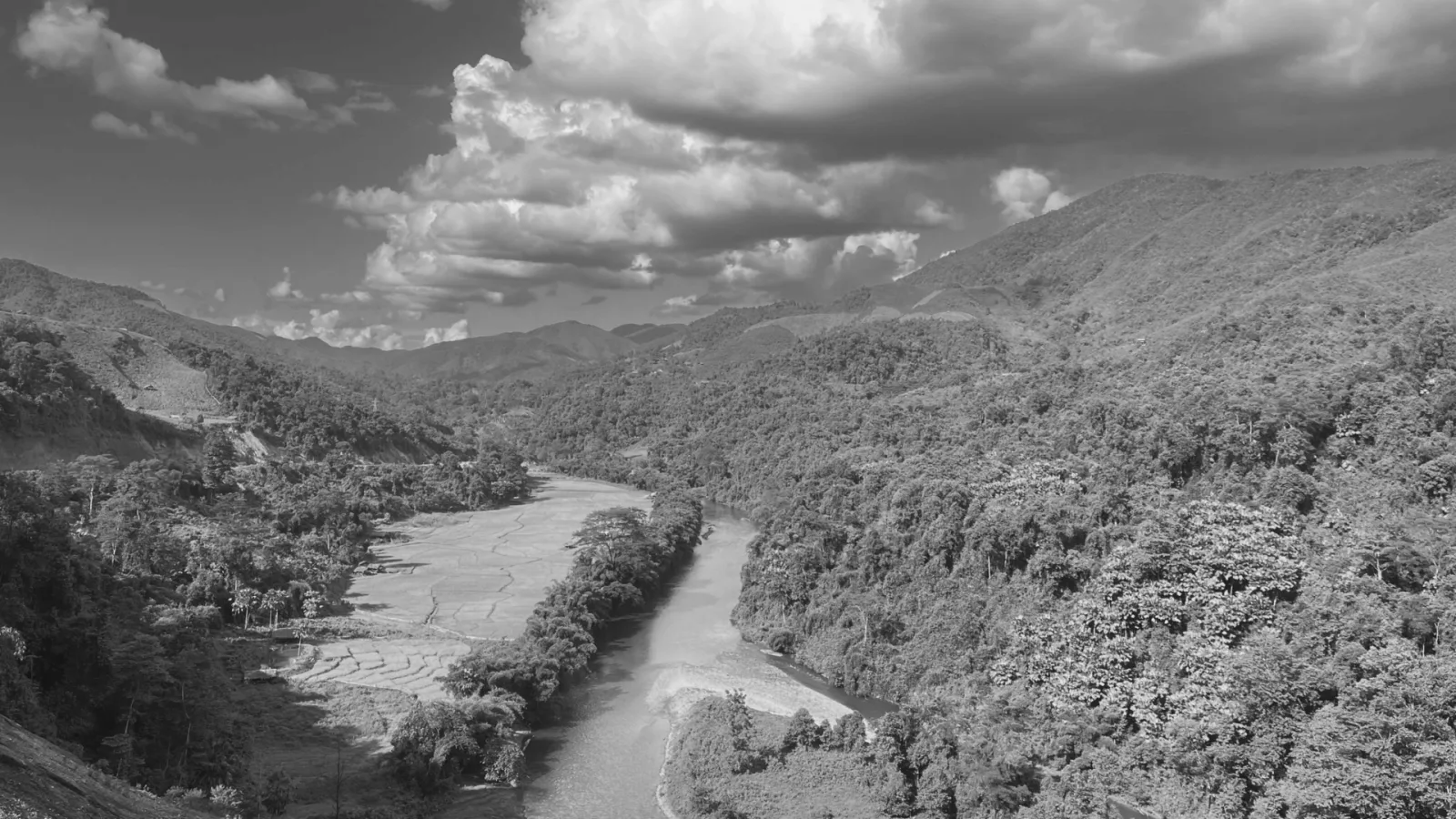
ImageSource: https://ghe.co.in/unexplored-trails-of-upper-subansiri/
Tags

Author
Violina Sarmah
Violina Sarmah is Research Fellow at CNAWS. She holds a Bachelor's degree in Political Science from Gauhati University and completed her Master's in International Relations at South Asian University, New Delhi. She is currently pursuing her PhD from South Asian University, New Delhi. Her research interests center on China, East Asia, and hydro-diplomacy, with a particular emphasis on transboundary water politics and its linkages to regional security and international relations.